
Most of the milestones on this project have come with an event attached. The SBAC pilot had a career day, the 3 August announcement had a Deputy Minister, and the J-MAT brief had a room of marketing students and a budget. This one arrived quietly, as a release note in an app store, and it is the one that puts the wallet in people’s hands.
On 15 September Thailand Post released a new build of Prompt Post on Google Play, and the App Store version, 430.0.14, followed this week. The release note asks users to keep their files secure in the Digital Document Wallet and to use Article 9 e-signatures. The Thai note names the wallet as Prompt Pass. This is the first store build of Prompt Post to carry the verifiable credential wallet we built, and it reaches everyone who already has the app the next time they update.
What’s in the build.
Thailand Post lists four changes. Users can choose which organisations on the platform send them news and manage the invitations that come with them, switch between a personal and a corporate mailbox, keep their files in the Digital Document Wallet, which is Prompt Pass, and sign documents under Section 9 of the Electronic Transactions Act.
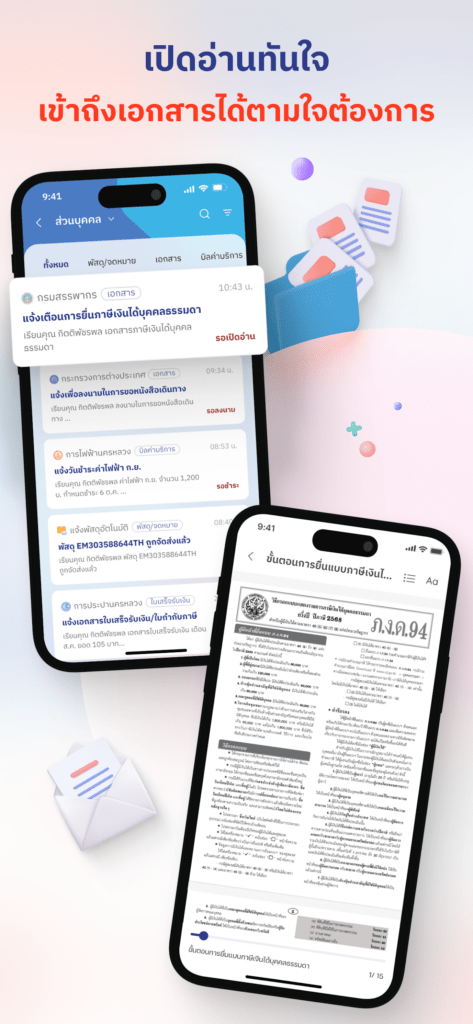
The wallet was delivered by TKC, Transformational and ShareRing for Thailand Post, and it now sits inside the app that already holds a person’s bills, government letters and parcel tracking. A document held in the wallet carries the signature its issuer applied when it was created, so whoever it is shown to can check that signature directly and confirm it in seconds, without calling the issuer or keeping a copy.
The other three changes connect to a problem Thailand Post named in the J-MAT brief. A document wallet is an app people open when something arrives, so few people go looking for it before then. Letting an organisation reach a user before its first document lands, and letting a small business owner run the company mailbox alongside their own, both give people a reason to be in the wallet before they need it.
The app it sits inside.
From where we sit it is easy to think of Prompt Pass as the product. For the person holding the phone it is one feature in an app they downloaded for other reasons.
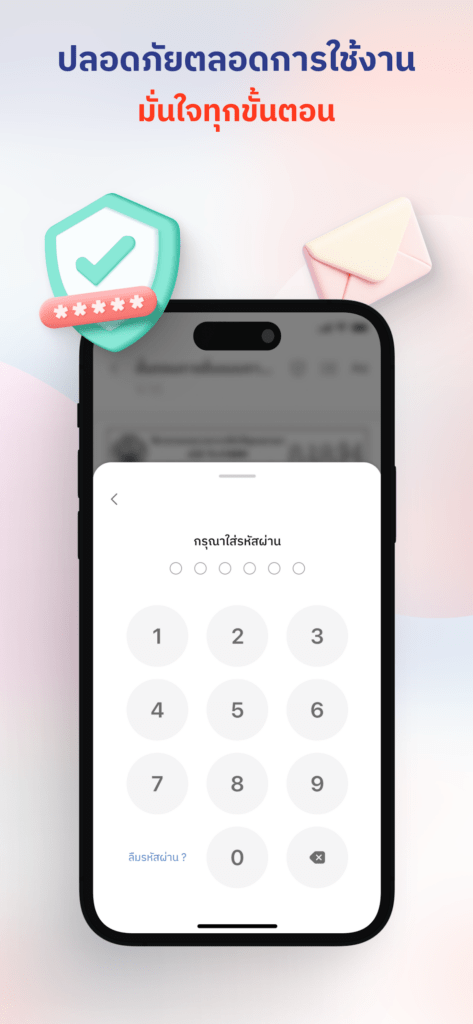
Prompt Post is Thailand Post’s document app. The Digital Postbox receives, stores and sends official letters, bills and receipts. Auto Track and Trace follows every parcel and letter through the network and notifies the user at each step. Partner services run through the same app, from the Department of Corrections’ electronic postbox to import duty payments and requests for education documents. Identity verification meets the Department of Provincial Administration’s standard, and the app is protected by a PIN, Face ID or Touch ID.
The version history shows what kind of app it is. The July builds reworked the QR payment screen and ran a football vote, the August builds carried a Premier League campaign with Monomax, last November’s release rebuilt the home screen and December’s added bill payment and calendar reminders. It is a consumer app that ships every few weeks, with more than 100,000 downloads and a 4.9 rating on Google Play.
Over the past decade most identity wallets have launched as standalone apps and struggled because people had no everyday reason to open them. Thailand Post has put its wallet inside an app people already open when a parcel is on the way.


The update goes to everyone who already has the app.
In August I wrote that an announcement tells you a partner believes in you, and a budget tells you they have decided to sell what you built. A store build means the product is in people’s hands, and from here the question is how many of them use it.
At J-MAT, Thailand Post put its own numbers on the screen: around 12,000 downloads a month. Each of those now lands in a build with the wallet in it, and every existing user who accepts the update gets the wallet without installing anything else. There is no acquisition cost and no campaign behind that. It is the kind of distribution a digital identity product only gets by being built inside a national institution’s app rather than alongside it.
Section 9 e-signatures, and who they are for.
The wallet will get most of the attention. The e-signature is the feature I expect people to use most in the first year.
Section 9 of the Electronic Transactions Act is the provision that gives an electronic signature legal effect in Thailand. The signature has to identify the signer, show that they agreed to the contents, and be attached to the document by a method that is reliable for the purpose. Sections 26 and 28 sit above it for signatures backed by public key cryptography and by a certified provider, and I expect the platform to move up those tiers as the use cases require. Section 9 is the right starting point, and it covers most of what people sign day to day.
The J-MAT brief described the person this is for: a freelancer or small business owner who closes deals on contracts and works through a print, sign, scan and send cycle that takes three to seven days per document, on paper that cannot prove when it was signed. The brief also set the price, 18 baht for the signature and 6 baht for a legally effective timestamp. From this build, that person can sign inside Prompt Post, in the corporate mailbox the same update added.
Who did what.
Transformational, led by Ariya Banomyong, is the delivery partner on the ground in Bangkok. TKC provides the systems integration. ShareRing provides the wallet and the credential layer beneath it, where the issuer signs a document once, the holder carries it on their own phone, and the verifier checks it without holding a copy. Thailand Post owns the customer, the brand, a network of more than 50,000 service points and, since August, the go-to-market. All of it operates under Ministry of Digital Economy and Society policy and ETDA standards.
What changed this week is that the layer we built is now in the general release of the app. Many national identity programmes never reach that point.
ShareRing powers this.
Prompt Pass runs on ShareRing technology. The verifiable credential layer under the wallet was built by our engineering team in Vietnam and delivered with TKC and Transformational for Thailand Post to operate. Prompt Post has more than 100,000 downloads and a 4.9 rating on Google Play, and from this week everyone who updates has a verifiable credential wallet and a legally recognised e-signature on their phone. Digital transcripts come first, the universities on Thailand Post’s roadmap follow, and contract signing for freelancers and small businesses comes after that.
If you are in Thailand, update Prompt Post and open the wallet. If your organisation issues documents to people in Thailand, whether a university, a bank or a government agency, talk to us about issuing into it; each new issuer makes the wallet more useful for everyone holding it. And if your country or your company is working on the same problem, come and talk to us at sharering.network, or book a demo.
Frequently asked questions.
What is in the Prompt Post update?
Version 430.0.14, released on Google Play on 15 September 2026 and on the App Store this week, adds a choice of which organisations send you news, a switch between personal and corporate mailboxes, the Digital Document Wallet, which is Prompt Pass, and Section 9 e-signatures.
What is Prompt Pass?
Prompt Pass is Thailand Post’s digital document wallet inside the Prompt Post app. It holds verifiable credentials, documents that carry their issuer’s signature so anyone they are shown to can check them in seconds without keeping a copy. It runs on ShareRing technology and was delivered with TKC and Transformational.
What is a Section 9 e-signature?
Section 9 of Thailand’s Electronic Transactions Act gives an electronic signature legal effect when it identifies the signer, shows they agreed to the contents and uses a method that is reliable for the purpose. Sections 26 and 28 are the higher tiers. Thailand Post’s J-MAT brief priced the signature at 18 baht and a legally effective timestamp at 6 baht.
Do I need a new app to use the wallet?
No. Update Prompt Post from Google Play or the App Store. The wallet and the e-signature are inside the existing app.
Who built Prompt Pass?
ShareRing built the wallet and the verifiable credential layer, TKC provides the systems integration and Transformational is the delivery partner in Bangkok. Thailand Post operates it under Ministry of Digital Economy and Society policy and ETDA standards.
By Rohan Le Page, Founder and Co-CEO of ShareRing
#PromptPass #PromptPost #ThailandPost #VerifiableCredentials #DigitalDocumentWallet #ESignature #DigitalIdentity #PrivacyKYC #Private #Secure #Verified