Simplifying IT
for a complex world.
Platform partnerships
- AWS
- Google Cloud
- Microsoft
- Salesforce
ShareRing Solutions is live: identity checks for accountants, real estate agents and bookmakers.
Explore ShareRing Solutions (opens in a new tab)Log in / Sign up

Privacy-preserving identity verification built for exchanges, custodial wallets and token platforms. Zero-knowledge proofs, a blockchain-native audit trail, and two-second returning-user verifications. FATF Travel Rule ready, built to the AUSTRAC AML/CTF requirements.
Regulators satisfied. Users still happy.
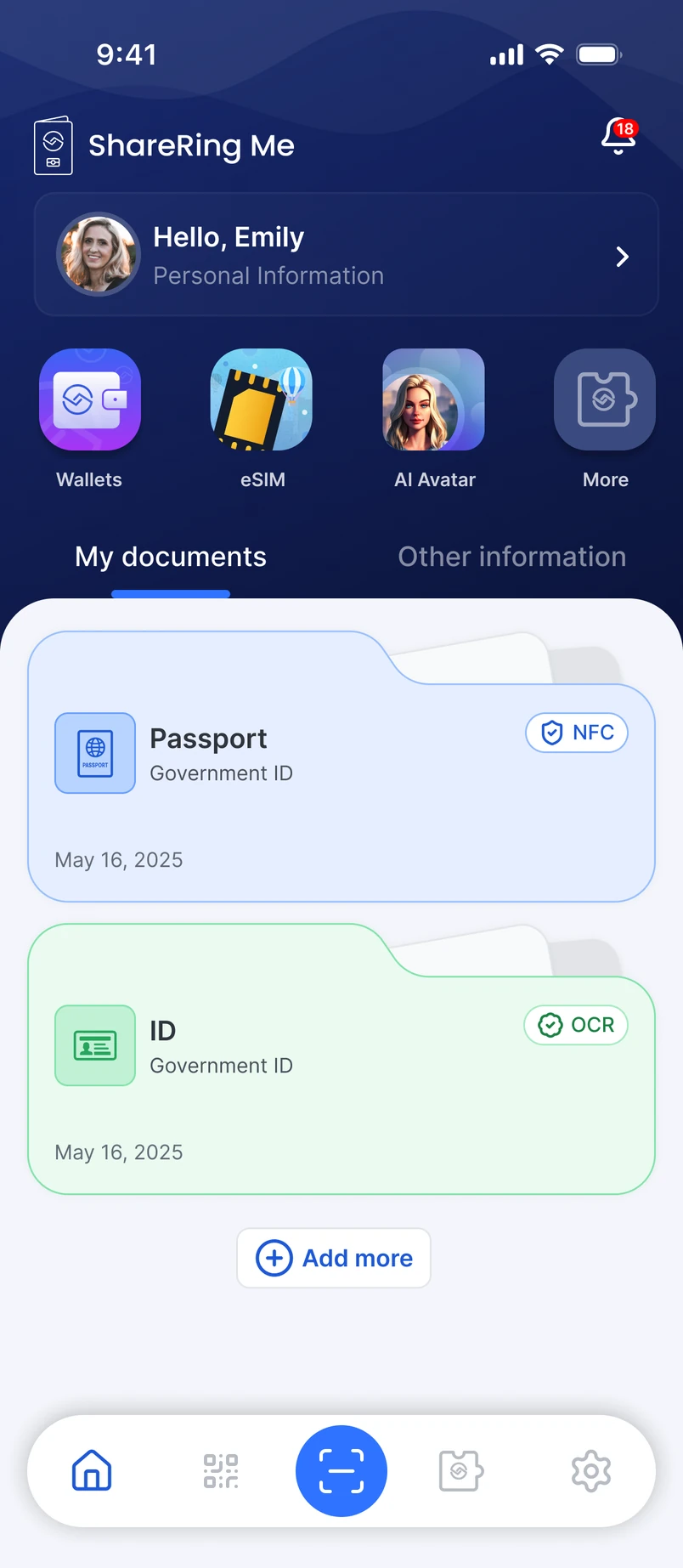
 ShareRing Me
About a minute the first time. About two seconds at the next exchange that asks.
 ShareRing Link
One result per run, carrying the fields the workflow asked for.
From MiCA in Europe to the AML/CTF reforms in Australia to FinCEN enforcement in the United States, regulators are expanding scope far beyond fiat-to-crypto gateways. Custodial wallets, token issuances and peer-to-peer swaps now fall under reporting entity rules.
Swapping digital assets now requires full KYC. An exchange wallet doing 1,000 USDC for 1,000 USDT is a reporting event.
Hold keys for users and you are a reporting entity: withdrawal thresholds, transaction monitoring, suspicious activity reporting.
ICOs, IDOs and token launches must verify participants, with geographic eligibility and sanctions screening.
Transfers above threshold require payer and payee identity to travel with the transaction, and wallet ownership to be verified.
Crypto-to-crypto swaps, custodial wallets and token launches are designated services, and the Travel Rule is live. Regulators from AUSTRAC to the SEC have moved from writing rules to enforcing them, and the exchanges that get through it are the ones that already verify properly.
What ShareRing gives an exchange
Originator and beneficiary data capture, VASP-to-VASP exchange and sanctions checks built to FATF Recommendation 16. KYC flows built for AUSTRAC-registered digital currency exchanges, and built to the EU MiCA requirements for CASPs across the bloc.
The three that matter
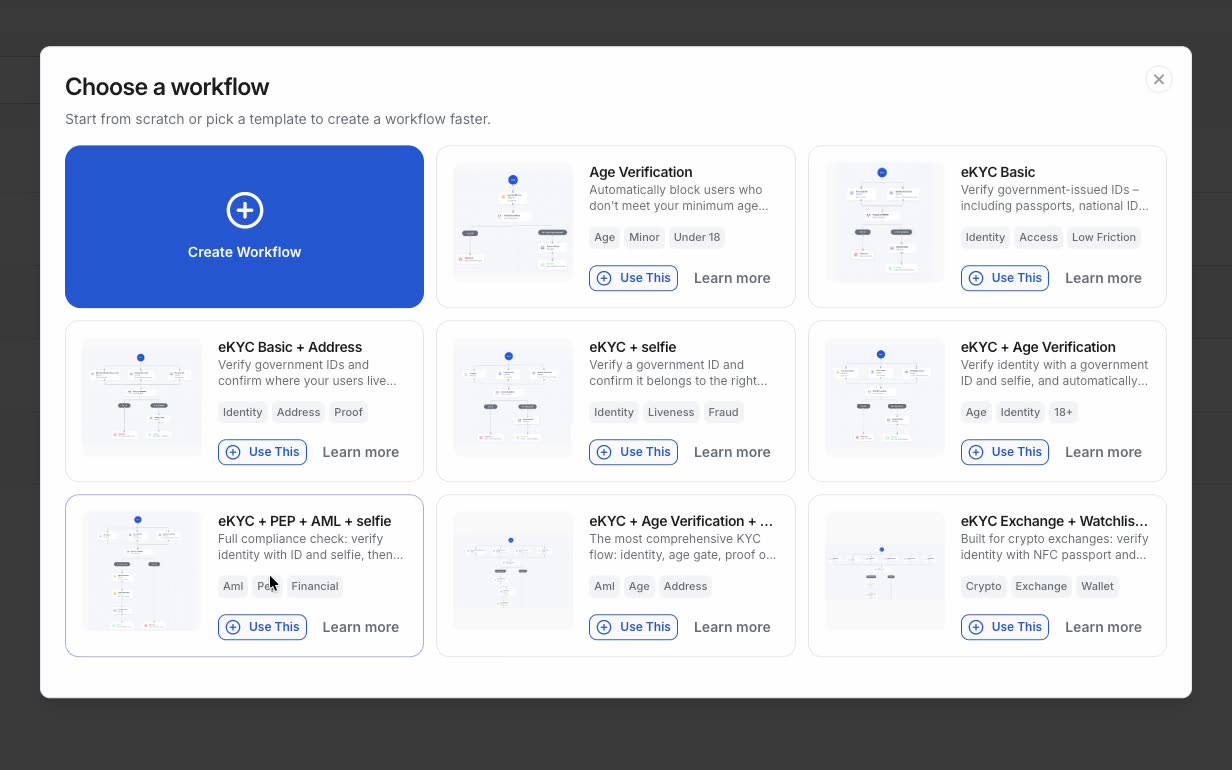
The heaviest chain ShareRing ships, and the one built for exchanges: NFC on the passport, biometric liveness, structured business fields, and a watchlist screen that only runs once all of it has passed.
age_verification
Over 18.
identity_document
Passport, NFC required, authenticity check on.
identity_document
Licence or ID card, authenticity check on.
personal_info
Photo, nationality, place of birth, address.
liveness_check
Face motion analysis, not a selfie upload.
custom_inputs
Occupation, company, contact address.
if_else
Age, liveness approved, and both document types valid.
watchlist
Sanctions, PEP and adverse media.
delivery_http
Signed payload, HMAC-SHA256, with retry.
end_ok
A verified customer, and no document left on your servers.
A returning user can skip the liveness step entirely by supplying an existing transaction, so the expensive node runs once per person rather than once per login.
Longer pieces from The Privacy Stack on the regulation, the cost and the mechanics behind this page.
By Rohan Le Page, Founder & Co-CEO, ShareRing I read breach reports the way some people read form guides before a…
6 Feb 2026Since we successfully completed our smart contract update late in 2025, we have been asked by the community to post an…
7 Apr 2026Self-sovereign identity is not a marketing term. It is a fundamentally different approach to how personal data is…
Privacy-preserving verification an exchange can deploy without making its users start again.