

A national postal service just started issuing verifiable credentials to the public. Not a pilot. Not a roadmap slide. A live service, in citizens’ hands, right now.
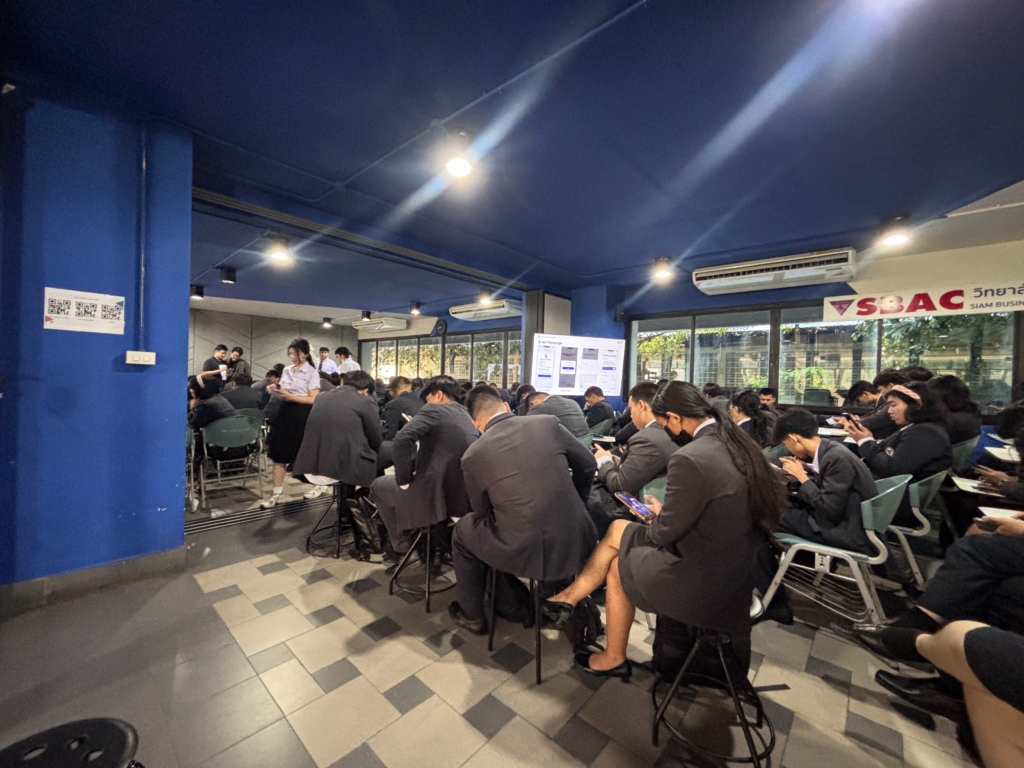
Thailand Post has launched Prompt Pass, a VC Wallet that lets people store, receive, send and verify official documents from one smartphone. The first rollout put digital transcripts in the hands of students at SBAC, who walked into Career Day 2026 and proved their qualifications on the spot. No paper. No forged certificates. No waiting on a registrar to post a sealed envelope.
It is built on ShareRing. And it is the clearest digital identity adoption signal this industry has produced all year.
The feature is impressive. The institution behind it is the real story.
Key takeaways
- Thailand Post launched Prompt Pass, a VC Wallet that issues verifiable credentials citizens hold on their own phone.
- The first rollout gave SBAC students digital transcripts they used to prove their qualifications instantly at Career Day 2026.
- Credentials follow a Verifiable Credential and Self-Sovereign Identity model, so the holder controls the data and shares only what each check needs.
- The service is built on ShareRing, aligns with Thailand’s national Digital Identity direction, follows ETDA standards, and runs under ISO/IEC 27001:2022.
- The model extends to schools, businesses and government agencies, which is why a national institution issuing verifiable credentials is the real adoption signal.
What Thailand Post actually launched
Prompt Pass is a verifiable credential wallet inside Prompt Post, Thailand Post’s digital document platform. The guiding idea, in the words of CEO Dr Danan Suphatphan, is “Document Less, Live More”. Citizens hold their important documents on their phone and share them when they choose to.
It is not limited to one document type. The wallet is built for education records, government certifications, professional licences and other official paperwork. Every credential is issued as a Verifiable Credential and held under a Self-Sovereign Identity model, so the user controls the data and discloses only what each situation requires.
This is not a side project running outside the rules. Prompt Pass aligns with Thailand’s national Digital Identity direction under the Ministry of Digital Economy and Society, and it follows the standards of the Electronic Transactions Development Agency. Thailand Post also holds ISO/IEC 27001:2022 certification for information security management. The credentials are recognised, verifiable, and built to an international standard.
The same model that secures a student transcript today extends to government agencies, businesses and service providers tomorrow, anywhere a document has to be issued, certified and checked. For the deeper context on why a country builds infrastructure like this, we wrote about why a country needs a private digital postbox.
Why a postal service issuing verifiable credentials matters
Verifiable credentials are not new to anyone who follows this space. What is new is who is handing them out.
A postal service is one of the most trusted, most universal institutions a country has. It reaches every address and every citizen. When the post office starts issuing user-held verifiable credentials, self-sovereign identity stops being a concept for crypto conferences and becomes a normal government service. Adoption at that level does more for the model than another decade of whitepapers.
That is the pattern worth watching. The technology was ready. The missing piece was a trusted national body willing to put it in front of the public. Thailand Post just did.
What this changes for students
For students this is the part that changes daily life. Your transcript stops being a piece of paper you queue for, pay for and pray you do not lose. It becomes a verifiable credential you hold on your phone, issued by your college and trusted anywhere.
Apply for a job and you share a transcript the employer can verify in seconds, with no phone call to the registrar and no doubt about whether it is real. Apply to another institution, at home or overseas, and the same credential travels with you. Lose your phone and the record is recoverable, because it is not trapped in one office’s filing cabinet.
It also hands students something they have rarely had: control. Under the self-sovereign identity model you decide who sees what, and you share only the fact that needs proving rather than your whole record. The students at SBAC Career Day 2026 were the first cohort to use it, holding their transcripts as verifiable credentials they own for life. They will not be the last.
What this means for schools and colleges
Schools and colleges carry a quiet, expensive burden: issuing records, certifying copies, answering verification requests and absorbing fraud they can rarely prove. Verifiable credentials remove most of it. The institution issues a transcript once, signs it cryptographically, and every future check runs against that signature without the registrar lifting a finger.
That cuts administrative cost, ends the trade in forged certificates, and protects the institution’s reputation. A qualification from your school can no longer be faked without the fake failing an instant check. It also future-proofs the records office, because the same system that issues a transcript issues any credential a school awards, from short courses to professional certifications, all issued as verifiable credentials.
SBAC moved first here, and the reason matters. An institution that issues credentials students can actually use becomes more attractive to those students and to the employers hiring them. This is not a back-office upgrade. It is a competitive one.
What this means for governments
Most government identity systems still run on central databases. Every record sits in one place, which makes that place the target. Move the data onto user-held verifiable credentials and the honey pot disappears, while verification still works. We covered this directly when we looked at what happens when birth certificate databases get hacked.
Thailand has been ahead of this curve for a while. Its digital identity programme is already advancing through later stages while much of the world is still scoping phase one. Here is our read on Thailand’s Phase 2 digital identity framework. Prompt Pass is what that strategy looks like once it reaches the public.
For any government weighing a national identity build, the lesson is simple. You do not need to hold every citizen’s data to verify it. You need credentials people carry and a way to check them. That is cheaper to run, far safer to breach, and it respects the citizen by default.
The same pattern reaches every government body that issues or checks a document. Licensing authorities can issue professional licences as verifiable credentials. Health, transport and registry agencies can certify records the citizen carries. Courts, immigration desks and welfare offices can confirm a fact without pooling personal data in yet another database to breach. Every agency that adopts the model makes the next one easier, because the credentials and the verification work the same way across all of them. That is how a national digital identity programme actually compounds.
What this means for businesses
The Career Day rollout is a business story in disguise. An employer needed to confirm a candidate’s qualifications. Instead of phoning a college or trusting a printout, they checked a verifiable credential and got an instant, tamper-proof answer.
Every business that onboards customers, staff or partners runs some version of that check. Verifiable credentials cut the cost, kill the fraud and remove the paper. They also let a customer reuse a credential they already hold rather than handing over their full identity again and again. That is the reusable, privacy-first KYC model we have argued for from the start.
The adoption signal most people will miss
Verifiable credentials and self-sovereign identity have lived on the technical edge of the industry for years. This launch drags them into the mainstream, carried by a postal service and a college, used by students applying for jobs. That is what real adoption looks like. Quiet, practical, and aimed at a job people actually have to do.
ShareRing has been building this exact model since 2018: an encrypted vault, credentials the user controls, and verification that does not need a central honey pot. Privacy KYC is the layer that turns verifiable credentials into something a national institution can trust at scale. We are not waiting for this future. We are shipping it.
Read this next
For the architecture behind user-held credentials, read seven things that make self-sovereign identity different. For the policy backdrop, see Thailand’s Phase 2 digital identity framework. External reference: Techmoveon, Thailand Post launches Prompt Pass VC Wallet (13 June 2026).
FAQ
What is a verifiable credential?
It is a digital document whose authenticity can be checked instantly and cryptographically, without calling the issuer. The holder keeps it, presents it when needed, and the verifier confirms it is real and unaltered.
What is Prompt Pass?
Prompt Pass is Thailand Post’s VC Wallet inside the Prompt Post platform. It lets citizens store, receive, send and verify official documents such as transcripts, government certifications and professional licences from a single smartphone.
How does this protect privacy?
The credential lives with the user, not in a central database. Under the self-sovereign identity model the holder discloses only the data a given check requires, so there is no honey pot to breach and no oversharing to verify a single fact.
Is this available now?
Yes. Thailand Post launched Prompt Pass with SBAC, and students used digital transcripts at SBAC Career Day 2026. The model is built to extend across government, education and business.
Talk to us
ShareRing is the Privacy KYC layer behind verifiable credentials at scale. If you run a business that handles customer identity, or you advise governments on digital identity, we should talk. Visit sharering.network to see how the architecture works.
By Rohan Le Page, Founder and Co-CEO of ShareRing
#Private #Secure #Verified #PrivacyKYC #DigitalIdentity #VerifiableCredentials #ShareRing #Thailand #SSI